Lake Powell Nears Dead Power Pool Threshold, Threatening Water and Power Supplies
Lake Powell’s water level nears critical low, risking hydropower loss and water shortages for 40 million across the West.
Al_HikesAZ/Flickr
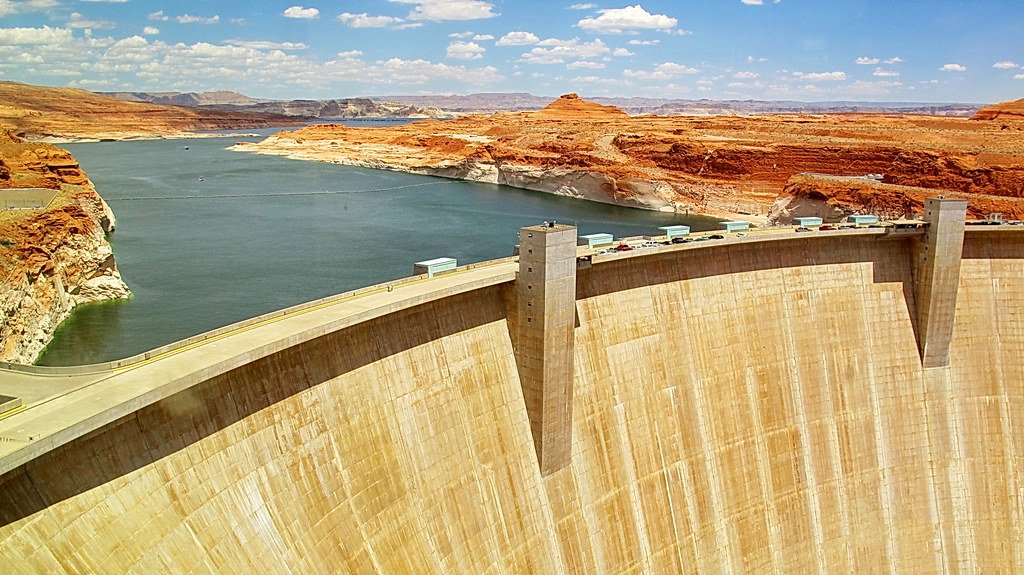
Lake Powell’s water level has fallen to a precarious 3,524.3 feet above sea level as of July 12, 2026, inching close to the “minimum power pool” of 3,490 feet. This critical threshold marks the point at which Glen Canyon Dam can no longer produce hydropower, posing severe consequences for millions of people relying on the Colorado River system for water, electricity, and agriculture.
Hydropower Generation at Risk as Lake Powell Drops
The Glen Canyon Dam’s powerplant, with its eight turbines capable of producing up to 1.32 million kilowatts, is already facing declining efficiency as the reservoir’s water level drops. The dam relies on hydraulic “head,” the vertical difference between the water surface and turbines, to generate electricity. As Lake Powell approaches the minimum power pool, the dam will be forced to release water only through its river outlet works rather than turbines, effectively halting hydropower production.
Falling below 3,490 feet could happen as early as August 2026 if drought conditions persist without significant intervention. Such a scenario would destabilize regional power supplies, affecting roughly 700,000 homes powered annually by the dam. The loss of hydropower also undermines the Colorado River Basin’s broader energy infrastructure, which is critical for the western U.S.
Emergency Measures and Downstream Impacts
The U.S. Bureau of Reclamation (USBR) has initiated emergency plans to bolster Lake Powell’s levels by reducing water releases downstream to Lake Mead and supplementing inflows from other reservoirs like Flaming Gorge. However, these efforts come with trade-offs. Reducing releases to Lake Mead accelerates its decline, threatening the Hoover Dam’s hydropower capacity by up to 40 percent as soon as this fall.
This balancing act highlights the interconnectedness of the Colorado River reservoirs and the complexity of managing water and energy resources amid prolonged drought. The USBR’s strategy prioritizes keeping Glen Canyon Dam operational, but it simultaneously pressures downstream communities and ecosystems reliant on Lake Mead.
Agriculture’s Role in the Water Crisis
Long-term solutions to the Colorado River’s dwindling water supply will likely require confronting agricultural water use, which constitutes the majority of consumption. Recent research shows that irrigated agriculture accounts for 74 percent of direct human water use from the river and 52 percent of overall consumption, with crops like alfalfa and cattle feed consuming nearly half of that water.
Experts, including Arizona State University’s Jay Famiglietti, emphasize that the basin can no longer sustain historic agricultural productivity without significant water reductions. Transitioning away from water-intensive crops and reducing the agricultural footprint in the basin will be essential to securing water for urban areas, ecosystems, and future generations.
Recreational and Economic Consequences
Lake Powell’s declining water levels have already reshaped shorelines, closed multiple boat ramps, and disrupted recreational activities vital to local economies, including boating, fishing, and rafting. Several major ramps—such as Wahweap Main and Antelope Point—remain closed to motorized vessels as of mid-July.
The National Park Service warns that continued low water could hamper tourism and local businesses dependent on reservoir activities. Furthermore, rafting conditions in the Grand Canyon and boating access at Lake Mead face similar threats, amplifying the economic ripple effects across the region.
The Colorado River Basin states are also under pressure to finalize new water-sharing agreements before current guidelines expire later this year. The crisis at Lake Powell underscores the urgency for cooperative, sustainable management to navigate one of the most critical water challenges facing the western United States.