Navi Pillay’s Nobel Peace Prize Highlights Global Rule of Law Amid US ICC Sanctions
Navi Pillay’s Nobel Peace Prize spotlights the rule of law amid US sanctions on the ICC and global justice challenges.
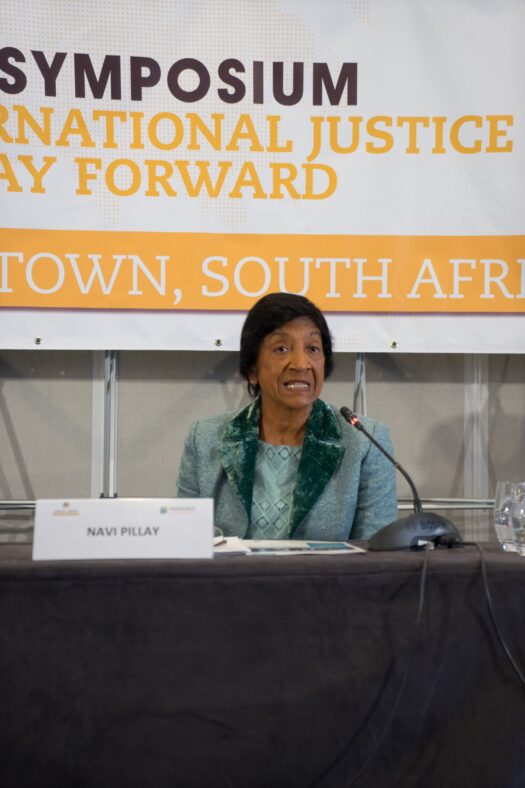
Wayamo Foundation/Wikimedia Commons
Navi Pillay, the South African jurist and former International Criminal Court judge, won the 2026 Nobel Peace Prize while attending a conference at the Nuremberg Court in Germany. Her recognition comes at a time when international legal institutions face mounting challenges, especially from the United States under President Donald Trump’s administration, which recently imposed new sanctions on the ICC.
A Nobel Prize Amid Rising Attacks on International Law
Pillay was awarded the Nobel Peace Prize as a symbol of the vital importance of the international legal order in maintaining peace. The Nobel committee’s decision underscored that the rule of law, both national and international, is the foundation of global peace and justice. At 85, Pillay’s extensive career includes serving on multiple international courts and overseeing a 2025 United Nations report that concluded Israel committed genocide in Gaza.
The committee’s message was clear: despite increasing attacks on these institutions—especially by powerful nations like the US—the international legal system must be upheld. This warning was implicit but pointed, as the United States has escalated efforts to undermine the ICC’s authority.
US Sanctions on the ICC and Political Pushback
Only hours after Pillay’s Nobel win was announced, President Donald Trump’s administration unveiled new sanctions against the International Criminal Court. Established in 2002 to prosecute war crimes, crimes against humanity, and genocide, the ICC has been under fire for its investigations into high-profile political figures such as Israeli Prime Minister Benjamin Netanyahu and former defense minister Yoav Gallant, who were indicted in 2024.
The ICC condemned the sanctions as an “assault on the rule of law and on the very foundations of the international legal order” and called on other nations to support the court’s work. US Secretary of State Marco Rubio, in July, had vowed to “dismantle” the ICC, accusing it of waging “a war against our country, not with bullets or missiles, but with the force of so-called international law.”
Pillay’s Career and Legacy in Justice
Born on September 23, 1941, in Durban, South Africa, Pillay grew up under apartheid and became a determined anti-apartheid lawyer. She was the first non-white woman to serve on South Africa’s High Court in 1995, though she left early after being elected by the UN General Assembly to the International Criminal Tribunal for Rwanda. There, she helped establish key legal precedents, including recognizing rape and sexual violence as crimes against humanity and genocide, and prosecuting incitement to genocide based on propaganda.
She served as an ICC judge from 2003-2008 and later as the UN human rights chief. Currently, she is a judge at the International Court of Justice in a case accusing Myanmar of genocide. Her career embodies the principles the Nobel committee sought to highlight: the necessity of justice and human rights for achieving lasting peace.
The Nobel Committee’s Political Statement
While the Nobel Peace Prize is not explicitly directed at any particular government, the committee’s recognition of Pillay serves as a rebuke to those undermining global justice frameworks. Acting director of the Peace Research Institute Oslo, Haakon Gjerløw, described the choice as “brave,” noting that major political actors are pushing against international legal orders. By awarding an individual rather than an institution, the committee emphasized the role individuals play in pursuing peace.
“History has shown that a world operating without the rule of law is unjust, unwise and inhumane,” the Nobel committee stated. They further lamented that judges who maintain order are now sanctioned and attacked, signaling a dangerous trend for global peace and accountability.
Pillay herself joked upon receiving the prize, “If you clap a little bit more, I may share this prize with (US President Donald) Trump,” referencing how last year’s laureate gave her medal to President Trump. She then added it was fitting to be surrounded by friends and colleagues who support human rights.
The Nobel Peace Prize awarded to Navi Pillay thus sends a powerful message to the world and to the Trump administration: the rule of law and justice remain essential for peace, even in an era of political resistance and sanctions.