Trump Humiliated at China Summit as Xi Jinping Leads Global Powers
At a pivotal summit, President Trump was politically humiliated while Xi Jinping asserted China’s dominance over global power dynamics.
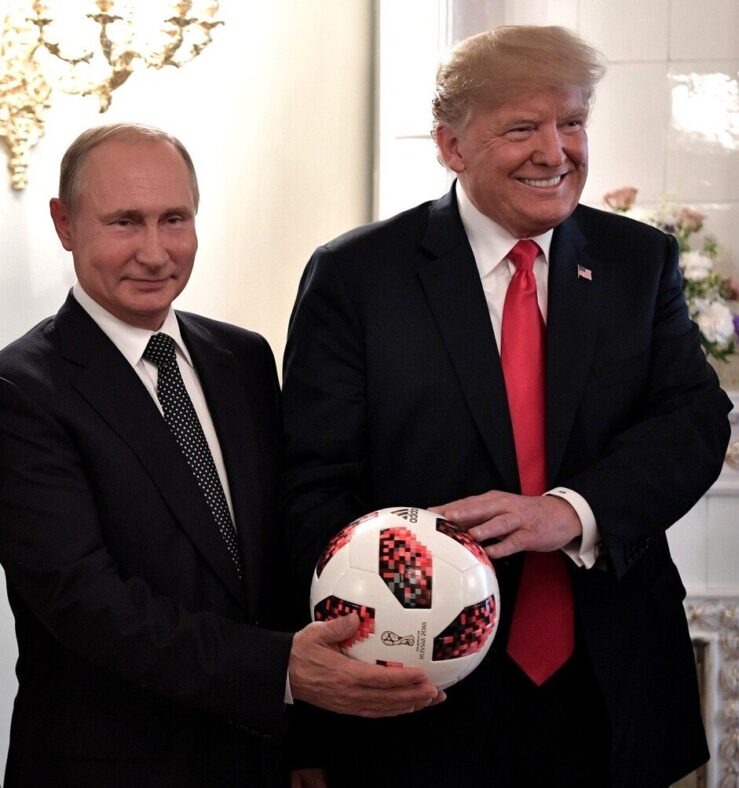
Kremlin.ru/Wikimedia Commons
At a recent summit hosted by China’s President Xi Jinping, the global power dynamics were on full display as Xi placed himself at the center, flanked by Russia’s Vladimir Putin and the United States’ President Donald Trump. The event underscored China’s emerging leadership role on the world stage while highlighting Trump’s political humiliation and desperate desire to belong to what Xi framed as a fraternity of autocrats.
Xi Jinping’s Dominance at the Summit
China’s president positioned himself visibly as the dominant figure among the world’s leading nuclear powers. Xi Jinping, serving as host, towered in stature over both Trump and Putin, symbolizing his country’s newfound global influence. The summit was not a gathering of the free world but rather a congregation of powerful autocrats, with Xi playing the role of the rehabilitator who sprinkled “the stardust of pomp” on both men.
Despite Putin’s status as a pariah four years ago due to his indictment at the International Criminal Court for war crimes related to Russia’s invasion of Ukraine, he was now feted and honored as an interlocutor on world peace. Similarly, Trump, who recently suffered political humiliation following his party’s midterm election losses and a failed war effort against Iran, was welcomed with military bands and cheering children, playing into his vanity.
Trump’s Vanity and Political Humiliation
President Trump appeared visibly pleased by the fanfare, stating, “This is a great president, one of the great presidents of China, and he’s never gone to the airport to meet somebody.” He boasted about being the only leader greeted at the airport by Xi, praising the “fanfare, the beauty, the pageantry, the thousands of people, the young children, the soldiers, the whole thing.”
Yet, beneath this veneer of celebration was a stark political humiliation. Trump’s disastrous decision to illegally attack Iran alongside Israel resulted in failure, increasing Iranian control over the Straits of Hormuz, choking fossil fuel exports, and causing global inflation. His Republican party faced severe setbacks in midterms, highlighting his waning influence at home despite his desperate attempts to appear powerful on the world stage.
Trump’s approach to diplomacy appeared focused less on substantive policy and more on belonging to the “fraternity of autocrats,” where being at the table with other powerful men like Putin and Xi was paramount.
Fractured Alliances and Global Implications
Prior to the trilateral summit, Trump and Putin met, with Trump reportedly entering in a casual “bro mode,” pointing at Putin and asking, “who’s this” before calling him “my friend” during an oily handshake. This display starkly contrasted with Ukraine’s President Volodymyr Zelensky, who has shown no such warmth toward Trump and remains a symbol of western democratic values.
Ukraine remains critical to the defense of democracy and the security of America’s European allies—principles that appear to mean little to Trump, who prioritizes personal stature over strategic alliances. China, aware of this dynamic, holds extensive leverage over both Russia and Iran through economic and military support, yet chooses not to intervene decisively to end ongoing conflicts.
China’s Strategic Leverage in Global Conflicts
China’s role in the global order is underscored by its economic and military ties to Russia and Iran. It is the largest importer of Russian fossil fuels and absorbs 80 to 90 percent of Iranian oil exports. Furthermore, many Russian and Iranian weapons systems rely on Chinese parts, and China’s civilian industries bolster their military complexes.
Despite this leverage, China does not participate in significant sanctions on Russia or Iran, which could aid America and its allies. Beijing controls 90 percent of the world’s rare earth minerals critical to U.S. technology, giving it substantial influence over global affairs.
Xi Jinping’s message, “History tells us that when major powers live in harmony, the world is at peace. When major powers clash, the world falls into turmoil,” hints at a desire to maintain stability favorable to China’s interests, even if that means allowing wars in Ukraine and Iran to persist as they weaken its rivals.
Ultimately, the summit revealed the shifting global power balance, with China asserting dominance, Putin rehabilitated, and Trump politically diminished yet desperate to assert relevance. Xi Jinping’s China is poised to shape the new world order, while Trump’s attempts to belong to this elite circle underscored his political humiliation on the international stage.