Why Trump Refuses to Renew USMCA and What It Means for North America
Trump’s refusal to renew the USMCA threatens $1.6 trillion in trade, raising concerns for US, Mexico, and Canada economies and supply chains.
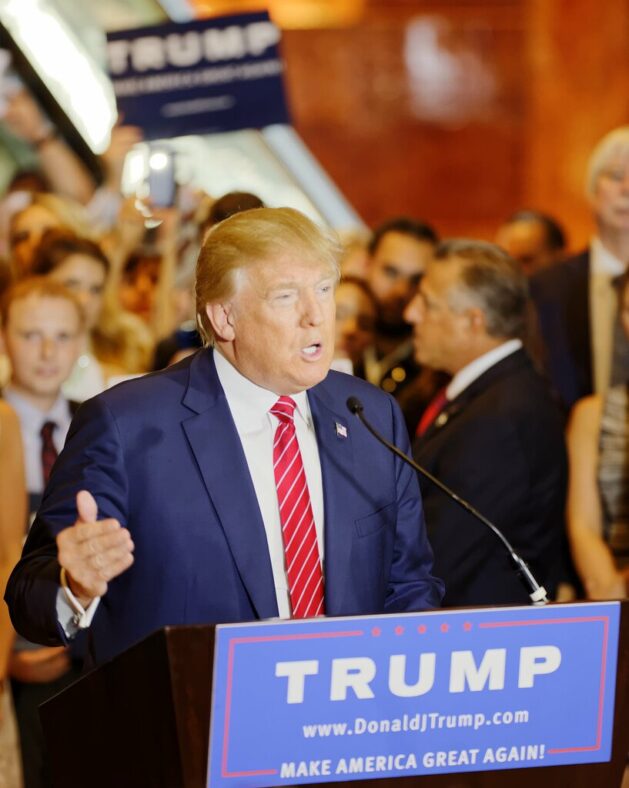
Michael Vadon/Flickr
On July 1, 2026, the United States announced it will not renew the United States-Mexico-Canada Agreement (USMCA) in its current form, sparking uncertainty across North American trade networks. The decision, revealed just a day before the agreement’s first mandatory joint review, reflects President Donald Trump’s longstanding criticism of the deal and his concerns about growing trade deficits with Canada and Mexico. As the trilateral pact covering $1.6 trillion in trade faces a potential overhaul or expiration, stakeholders on both sides of the border weigh the broader economic and political implications of this move.
What Is the USMCA and Why Does It Matter?
The USMCA, implemented on July 1, 2020, during Trump’s first term, replaced the North American Free Trade Agreement (NAFTA) with updated trade rules between the United States, Mexico, and Canada. It was designed to create a more balanced and reciprocal trade environment fostering high-paying American jobs and stronger regional economic growth. The agreement covers key sectors such as automotive manufacturing, digital trade, anticorruption measures, and small and medium-sized enterprises.
USMCA governs approximately $1.6 trillion in annual trade, making it a cornerstone of North American economic cooperation. Its sunset clause requires a mandatory joint review every six years, with the agreement set to expire after 16 years unless renewed. The recent US decision not to renew the pact in its current form triggers this review process and opens the door for renegotiations or eventual expiration in 2036.
Trump’s Criticism and Reasons for Refusal
President Trump has openly questioned the value of the USMCA, stating as recently as June 2026 that the deal offers “no real advantage” to the United States. He argues that while the US imports heavily from Canada and Mexico, these countries rely disproportionately on American goods and that the trade relationship is not sufficiently reciprocal or fair to the US.
Specific concerns include the rising US trade deficits with Mexico and Canada, which reached $197 billion and $48.3 billion respectively in 2025. The deficit with Canada is largely driven by crude oil imports, while Mexico’s deficit has grown as companies relocate supply chains from China to Mexico amidst US tariffs on Chinese goods. Additionally, Trump has maintained tariffs on Canadian and Mexican industries—including 25% on autos, 50% on metals, and 10% on lumber—reflecting skepticism toward the current framework.
Responses from Mexico and Canada
Both Mexico and Canada have expressed willingness to continue negotiations and address US concerns. Mexican Economy Minister Marcelo Ebrard emphasized that the differences between the three countries are solvable and highlighted protecting the automotive sector as a priority in discussions.
Canadian Minister Dominic LeBlanc echoed this sentiment, affirming Canada’s commitment to resolving tariff disputes and strengthening trade frameworks to support competitiveness and prosperity across North America. Both countries remain engaged in ongoing talks, with a third round of bilateral negotiations scheduled for the week of July 20, 2026.
What Are the Potential Impacts and Next Steps?
The US refusal to renew USMCA in its current form introduces uncertainty for businesses and workers deeply integrated into North American supply chains. Potential impacts include:
- Increased trade tensions and possible tariff escalations affecting automotive, manufacturing, and resource sectors.
- Disruption in supply chains as companies reassess cross-border production strategies.
- Pressure on policymakers to find compromises that address trade deficits without undermining regional cooperation.
Negotiations will continue, but if no agreement is reached to amend or renew the pact, the USMCA will remain in force until its termination date in 2036 as stipulated by the sunset clause. Meanwhile, stakeholders watch closely as the US, Mexico, and Canada attempt to balance national interests with the benefits of trilateral trade.
In sum, the US decision not to renew the USMCA in its current form marks a critical juncture for North American trade relations. The outcome of upcoming negotiations will have significant ramifications for economic growth, job security, and diplomatic ties throughout the region.