Nearly Half of Americans Support Arresting Netanyahu, Poll Finds
A new poll shows 49% of Americans back U.S. arresting Israeli PM Netanyahu over ICC war crimes warrant.
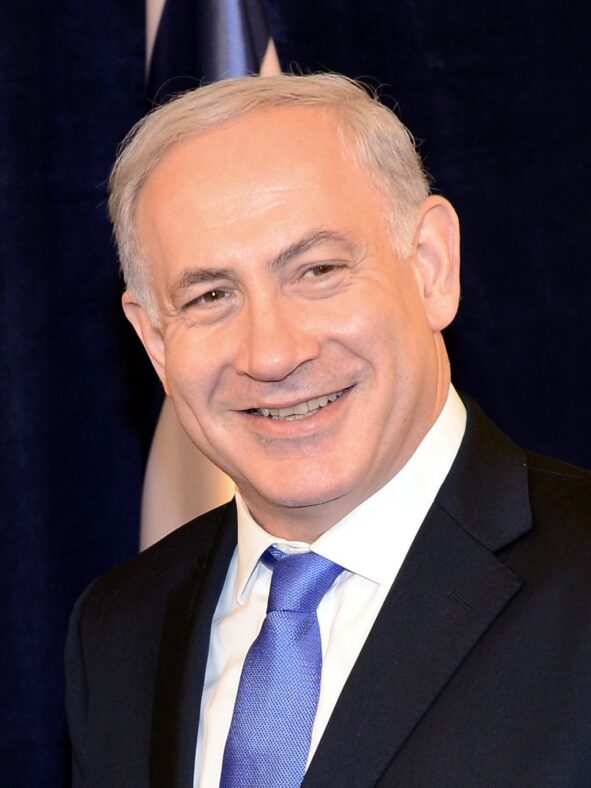
U.S. Department of State/Wikimedia Commons
A recent Economist/YouGov poll conducted between July 25 and 27, 2026, reveals that nearly half of Americans support the U.S. arresting Israeli Prime Minister Benjamin Netanyahu based on an International Criminal Court (ICC) warrant. This finding marks a significant shift in public opinion toward Israel’s leadership and signals a potential reexamination of U.S. foreign policy in the Middle East.
Widespread Support Across Political Lines
The poll surveyed over 1,500 adults nationwide and found that 49% of respondents believe the U.S. should detain Netanyahu, while only 27% oppose the idea. An additional 23% remain undecided. Remarkably, support for arresting the Israeli leader transcends political affiliations, with 68% of Democrats, 55% of independents, and 24% of Republicans backing the move. This broad-based approval indicates that concerns over Netanyahu’s actions are resonating beyond traditional partisan divides.
Public Perceptions of War Crimes and Genocide Allegations
The survey also explored Americans’ views on Netanyahu’s alleged war crimes amid ongoing conflicts in Gaza. Nearly half of those polled (47%) believe Netanyahu is guilty of war crimes, while 24% disagree and 29% are uncertain. When asked whether Israel is committing genocide against Palestinian civilians, responses showed a similar distribution of opinion. These perceptions reflect a growing skepticism about Israel’s military conduct and humanitarian impact, contrasting with previously more favorable U.S. attitudes.
Implications for U.S.-Israel Relations and Domestic Politics
This poll underscores a broader transformation in American sentiment toward Israel that has accelerated since the 2023 Hamas attacks and Israel’s subsequent military operations. The once steadfast U.S.-Israeli alliance now faces increasing scrutiny, particularly from progressive factions within the Democratic Party. For instance, New York Mayor Zohran Mamdani’s viral social media video calling Netanyahu a “war criminal” and urging his arrest struck a chord with many progressives, becoming his most viewed content to date.
While former President Donald Trump has dismissed the prospect of arresting Netanyahu, the poll suggests that progressive Democrats may push for more assertive measures against Israeli officials accused of war crimes, potentially using ICC warrants as justification. This could influence upcoming Democratic primary debates and shape foreign policy discussions, especially as military aid and legal accountability become contentious topics.
Challenges to Enforcement and ICC Membership
Despite the poll’s indication of popular support, practical barriers remain. The United States has historically refused to join the ICC, partly to shield its own officials from potential prosecution. Executing an ICC arrest warrant on U.S. soil would require a dramatic policy shift, including reconsidering the U.S. stance on ICC membership and international legal obligations. Without such changes, calls for arrests may remain largely symbolic rather than actionable.
What This Means Going Forward
The growing willingness among Americans to consider the arrest of a sitting Israeli prime minister signals a profound change in public attitudes and opens the door for more confrontational U.S. policies toward Israel’s government. While it is too early to predict concrete policy shifts, the poll highlights an evolving political landscape in which accountability for alleged war crimes is becoming a mainstream issue. For Wayne County, Duplin County, and North Carolina readers, this represents a moment to watch how international justice debates intersect with domestic politics and reshape America’s role on the global stage.
As public opinion continues to evolve in 2026, the U.S.-Israel relationship may face new pressures, and the question of enforcing international legal standards could emerge as a defining issue in coming elections and foreign policy decisions.