Echoes of Jim Crow: Black Leaders Sound Alarm on Voting Rights Erosion in the South
Black advocates in North Carolina and across the South warn that tactics reminiscent of the Jim Crow era are resurfacing as voting maps are redrawn.
Associated Press
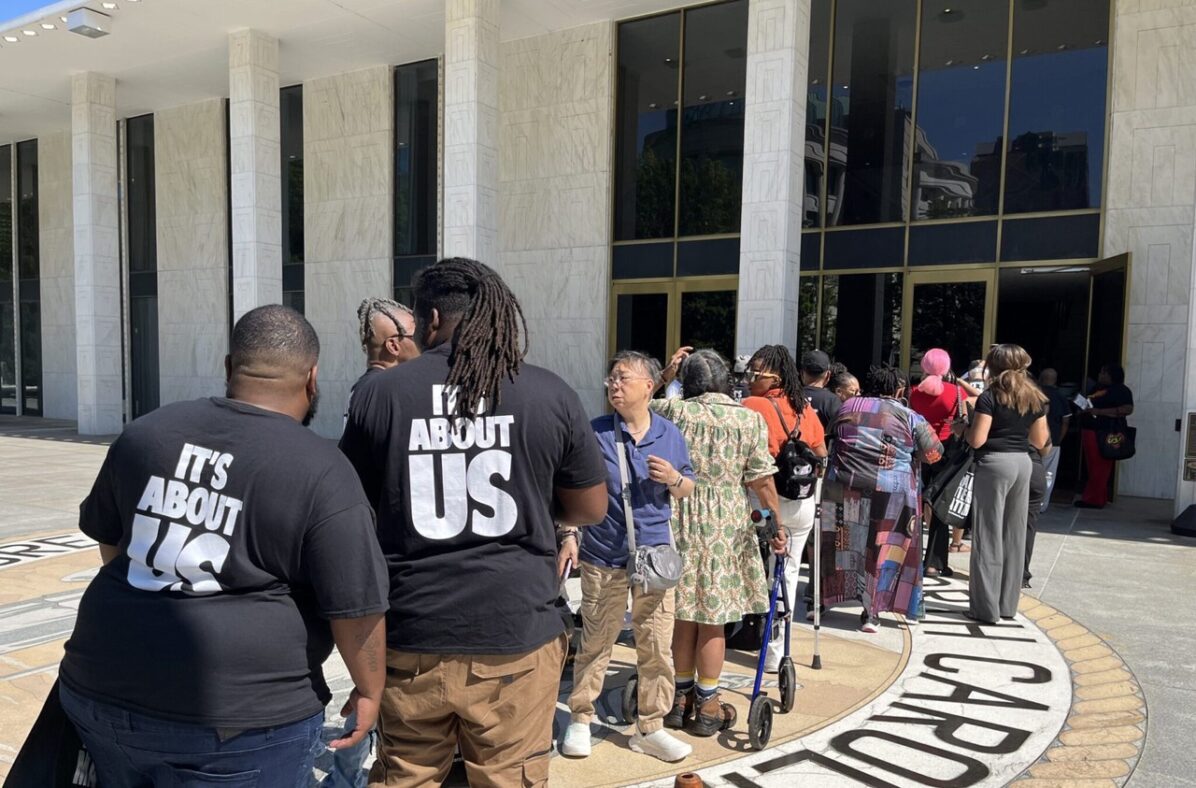
A growing chorus of Black community leaders and elected officials in North Carolina is raising urgent concerns, asserting that the specter of voter suppression, reminiscent of the Jim Crow era, is not a relic of the past but a present-day threat. These warnings come as legislative bodies across the South, including North Carolina, engage in redistricting efforts that critics argue systematically disenfranchise Black voters.
Javita Lee Miller, policy director for Advance North Carolina, articulated a somber reality for many in the Black community. “There’s a widespread assumption that we have moved far beyond the oppressive grip of Jim Crow,” Miller stated. “However, I must humbly submit that for our communities, that era has never truly concluded. It has simply been passed down and is now being perpetuated by subsequent generations.”
Miller underscored the historical parallels, citing Tennessee’s pivotal role in implementing poll taxes in 1870, a tactic that disenfranchised Black voters for decades. This historical precedent, she noted, finds a disturbing echo in contemporary legislative proposals like the SAVE America Act, which advocates say would impose stringent citizenship verification and photo ID requirements, potentially creating new barriers to voting.
A Pattern of Suppression
Senator Val Applewhite (D-Cumberland) shared her firsthand experience with the legal battles surrounding voter suppression. She was involved in the 2018 U.S. Supreme Court case, North Carolina v. Covington, where the court acknowledged that Republican state lawmakers had indeed violated the federal Voting Rights Act through gerrymandering designed to diminish Black voter influence. “It is undeniable that North Carolina has long been a focal point for voter suppression tactics,” Applewhite remarked.
The legal landscape for challenging such practices has become more precarious following a recent Supreme Court ruling. This decision significantly curtailed the scope of the Voting Rights Act, now limiting its protective power to only those instances where maps are demonstrably drawn with the explicit intent of racial discrimination. This narrowing of the law makes it exceedingly difficult to challenge gerrymandered districts on the grounds of violating voting rights.
Redistricting Fuels Concerns
In recent months, a nationwide trend has emerged where states, often at the behest of Republican leadership, have redrawn congressional district boundaries to enhance Republican representation. North Carolina is no exception. A redistricting plan passed by Republicans in October is projected to alter the state’s congressional delegation from a balance of 10 Republicans and four Democrats to 11 Republicans and three Democrats. A key feature of this plan involves “cracking” the historic Black Belt region in eastern North Carolina, a move specifically aimed at diminishing the electoral power of Democratic Representative Don Davis and drawing sharp criticism from Black leaders.
Senate Democratic Leader Sydney Batch (D-Wake) emphasized that meaningful progress in combating gerrymandering is contingent upon a shift in the composition of the state legislature. “Without the courage of Republican representatives willing to stand with us and affirm that the power to choose elected officials should reside with the voters, not the other way around, this struggle will persist,” Batch asserted. “I see little hope for equitable maps or the passage of a constitutional amendment unless Democrats hold the majority.”
Ironically, during periods when Democrats have controlled the North Carolina legislature, both voting rights advocates and Republicans called for legislation to ban gerrymandering. However, Democratic leadership at those times reportedly did not permit votes on such proposals, highlighting the complex political dynamics at play in the fight for fair representation.