US Sounds Alarm as China Tests Nuclear Submarine Missile in Pacific
China’s latest submarine-launched missile test sparks US, regional concern amid rising nuclear tensions in 2026.
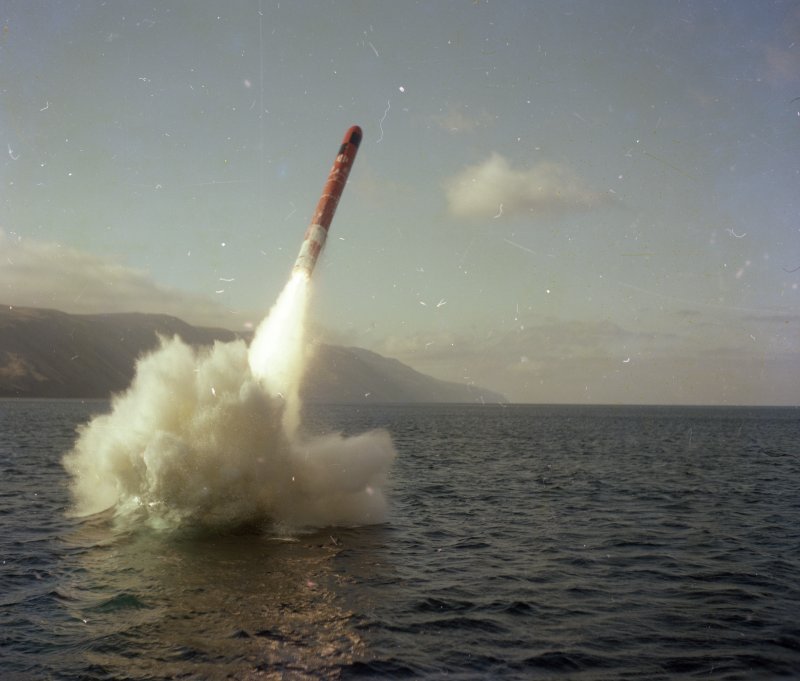
San Diego Air & Space Museum Archives/Wikimedia Commons
China conducted a test launch of a long-range ballistic missile from one of its nuclear-powered submarines in the South Pacific on July 6, 2026, drawing sharp criticism and concern from the United States and Pacific nations. The launch, which carried a dummy warhead, was part of China’s routine military exercises but has heightened worries over Beijing’s expanding nuclear arsenal and regional stability.
Details of China’s Missile Test and Military Exercises
The missile was launched at 12:01 p.m. local time from a submarine in international waters, according to China’s official Xinhua News Agency. It carried a non-nuclear dummy warhead as part of annual training, the Ministry of Defense stated. This test marks the first such submarine-launched intercontinental ballistic missile (SLBM) trial in the South Pacific since a similar launch two years ago, which was itself the first in decades.
Simultaneously, China and Russia initiated their annual joint naval exercises, dubbed “Joint Sea-2026,” off the coast of Qingdao, China. These drills underscore the growing strategic partnership between Beijing and Moscow amid escalating global tensions.
US and Regional Responses Highlight Growing Nuclear Concerns
The United States closely monitored the missile launch, with State Department spokesperson Tommy Pigott expressing deep concern over China’s expanding nuclear capabilities. “At a time when the United States is working harder than ever to prevent nuclear proliferation, China is doing the opposite,” Pigott said. He emphasized Beijing’s “rapid and opaque nuclear weapons buildup” as a threat not only to the region but the entire world.
The US urged China to engage in arms control talks and to establish regular notification protocols for missile and space launches, aligning with commitments by other nuclear powers. The statement reaffirmed Washington’s unwavering defense commitments to its regional allies and partners.
Australia, New Zealand, Japan, and Taiwan also voiced strong criticism. New Zealand noted that China informed its government only hours before the test and reiterated that the missile was launched within the South Pacific Nuclear Free Zone, established under the 1986 Treaty of Rarotonga, which China has pledged to respect.
Australia’s Foreign Minister Penny Wong labeled the launch as “destabilizing” for the region and reaffirmed Australia’s commitment to countering Chinese influence. Japan urged China to reconsider such tests to avoid threats to its security, especially concerning missile trajectories near Japanese airspace. Taiwan accused China of attempting to intimidate the international community through such demonstrations of military might.
China’s Nuclear Strategy and Global Military Posture
Beijing defended the missile test as routine and compliant with international law, dismissing foreign criticism as “overinterpretation.” China maintains a declared “no first use” nuclear policy but has been steadily modernizing its nuclear forces as part of broader military advancements.
According to the Washington-based Nuclear Threat Initiative, as of mid-2026, China operates six ballistic-missile submarines and 59 nuclear-powered attack submarines, reflecting a significant expansion of its naval nuclear capabilities. Analysts view these developments as a strategic effort by Beijing to secure a credible second-strike capability and assert its status as a global superpower.
Implications for Regional Security and Future Diplomacy
The missile test comes at a sensitive time, coinciding with Australia and Fiji’s signing of a new mutual defense treaty aimed at balancing Chinese influence in the Pacific. The event also intensifies calls for renewed arms control discussions involving China and other nuclear-armed states.
Experts warn that without transparency and dialogue, China’s nuclear buildup could trigger an arms race in the Indo-Pacific, destabilizing decades-old security arrangements. The United States and its allies continue to push for mechanisms that would improve communication and reduce the risk of miscalculation.
China’s July 6 missile test, while framed by Beijing as standard military practice, has reignited global concerns about nuclear proliferation and regional stability in 2026. The coming months are likely to see heightened diplomatic efforts aimed at addressing these challenges while managing the evolving power balance in the Pacific.