Federal Funding Volatility Threatens Affordable Housing Efforts in North Carolina
North Carolina housing advocates grapple with precarious federal funding, impacting crucial services and the fight against homelessness.
Associated Press
The persistent and escalating housing crisis across the United States is forcing economically vulnerable individuals and families into untenable situations, compelling them to make agonizing choices between essential needs and shelter. This stark reality was articulated by Renee M. Willis, president and CEO of the National Low Income Housing Coalition, who highlighted the dire consequences of inadequate housing affordability.
“We’re talking about choices between rent or medicine, choices between transportation and rent, choices between child care and rent,” Willis stated. “These are choices that no family should have to make.”

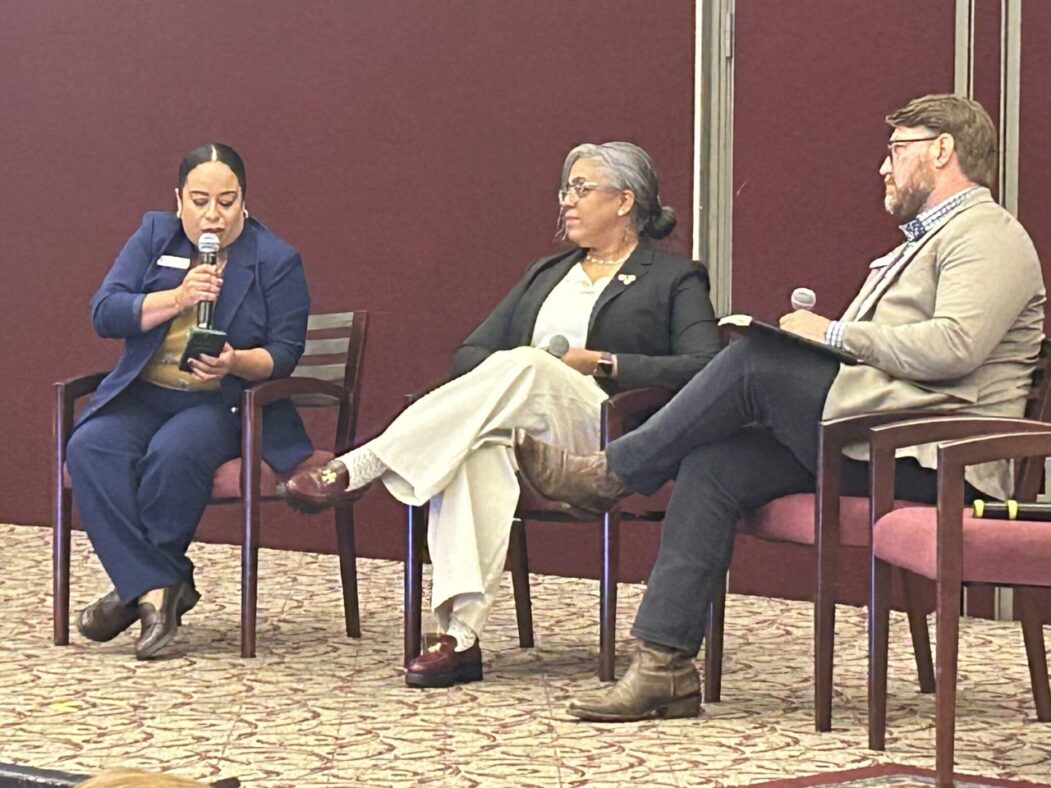
Willis delivered the keynote address at “Bringing It Home 2026,” an annual statewide conference that convenes service providers, industry experts, and advocates dedicated to finding solutions to the housing crisis. The event, sponsored by the NC Housing Coalition, the NC Department of Health and Human Services, and the NC Coalition to End Homelessness, convened at a time of significant flux and uncertainty regarding federal funding streams.
Federal Funding Uncertainty Hinders Progress
Conference organizers noted that even when federal funds are appropriated, their disbursement is often subject to considerable delays. This unpredictability poses an existential threat to many organizations working on the front lines of housing insecurity.
“It’s an existential crisis for a lot of organizations, some of which have ceased the work they do because they no longer have the money for it, have lost people or are not able to serve,” explained Samuel Gunter, executive director of the NC Housing Coalition. “We’re in the midst of bigger economic pressures. We’re losing the reliability of federal resources that are targeted to the solutions.”

Willis emphasized that the precipice between being securely housed and experiencing homelessness is far narrower than many perceive. A single adverse event, such as a medical emergency, job loss, divorce, domestic violence, disability, natural disaster, or even a significant rent increase, can destabilize a household, leading to a situation where financial realities become insurmountable.
The Devastating Gap in Affordable Housing
Citing her organization’s report, “The Gap: A Shortage of Affordable Homes,” Willis revealed a national deficit of approximately 7.2 million rental homes accessible to extremely low-income renters. Across the nation, only 35 affordable and available rental homes exist for every 100 extremely low-income renter households. In North Carolina, this ratio improves slightly to 38 homes for every 100 low-income households, still indicating a substantial shortfall.

The “Out of Reach 2025” report further illustrated this disparity, finding that nationally, an individual must earn $33.63 per hour to afford a modest two-bedroom rental home. In North Carolina, the calculated “housing wage” for a comparable dwelling stands at $27.14 per hour. This means that essential workers, such as home healthcare aides, childcare providers, nursing assistants, restaurant staff, and school support personnel – individuals whose labor is vital to community function – often cannot afford to live in the communities they serve, not due to a lack of effort, but because of systemic economic pressures.
Willis pointed out that North Carolina’s minimum wage remains at $7.25 per hour, a rate unchanged at the federal level since July 2009, marking the longest period of stagnation in U.S. history. In response, a group of state House Democrats has introduced House Bill 1059, the “Fair Minimum Wage Act,” which would empower local governments to establish a higher minimum wage, capped at $15 per hour and adjusted annually for inflation. The bill includes a provision for small businesses with annual revenues under $400,000, capping their minimum wage at $11 per hour.

The Foundational Importance of Housing
Willis underscored that secure and affordable housing is a fundamental prerequisite for individual and community well-being. It directly impacts children’s educational success, health outcomes, economic mobility, and the overall capacity of communities to thrive. Housing is increasingly recognized as a defining issue of our era.
Despite the formidable challenges, Willis expressed optimism, noting a growing national dialogue around affordable housing that is increasingly framed in a positive and proactive light. She referenced the bipartisan 21st Century ROAD to Housing Act, designed to address the affordable housing crisis by expanding supply, reducing regulatory hurdles, and curbing the influence of large corporate investors in the single-family market.
“We’re seeing people engage, we’re seeing members of Congress engage because they see how housing and the lack of housing affects their communities,” Willis remarked. “I’m also encouraged by the growing recognition that housing must be central to disaster recovery. Here in North Carolina, you understand that reality better the most.”

Dr. Latonya Agard, executive director of the N.C. Coalition to End Homelessness, concurred that funding unpredictability has presented substantial obstacles for non-profit organizations serving the state’s unhoused population. “Finding affordable housing in a market that continues to soar has just been really hard on the programmatic level for people who are doing direct service,” Agard stated. “I would say those are the things people are struggling with right now.”
Addressing the more than 400 conference attendees, Willis urged them to persevere, emphasizing the profound importance of their work. “Housing costs are too high and the system serving people experiencing homelessness faces enormous pressure,” she concluded. “But hope does not require certainty. Hope requires purpose. It requires persistence and it requires people to continue to show up even when the outcome is not guaranteed.”