Lutnick Faces Scrutiny Over Nvidia Ties as Chip Export Controls Falter
Commerce Secretary Lutnick is criticized for his close ties to Nvidia’s CEO and lax chip export controls amid a growing scandal.
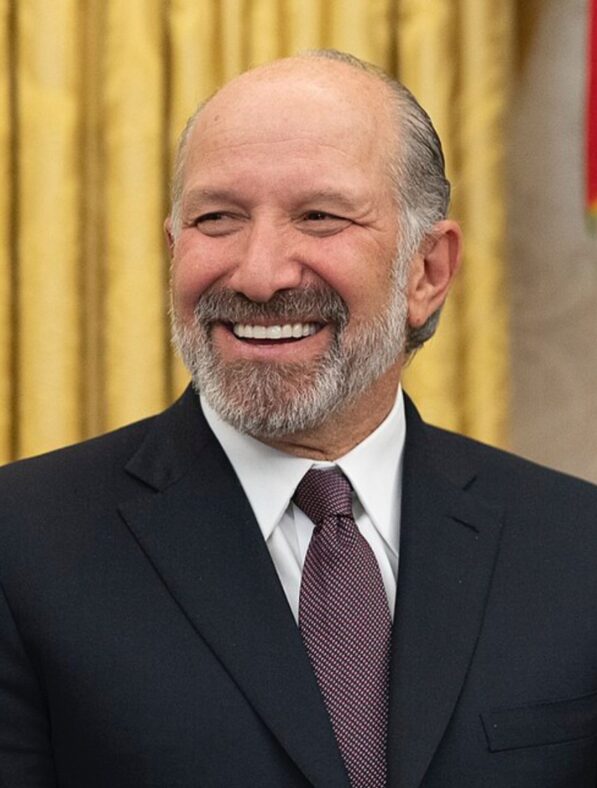
The White House/Wikimedia Commons
Howard Lutnick, President Donald Trump’s Commerce Secretary, is under intense scrutiny following the resignation of Nvidia CEO Jensen Huang amid revelations of personal scandals and concerns over US chip export controls to China. Lutnick’s close relationship with Huang and perceived failure to enforce export restrictions have drawn criticism from both Republican and Democratic lawmakers as the administration navigates a sensitive tech and trade landscape ahead of an upcoming Trump-Xi Jinping meeting.
A Growing Relationship Between Lutnick and Huang
At the start of Trump’s second term, Lutnick made a direct call to Nvidia CEO Jensen Huang, assuring him, “whenever you need the president, call us.” This marked the beginning of a rapidly deepening relationship that shaped the White House’s approach to advanced chip technology. Eleven days after Trump’s inauguration, Huang met both President Trump and Lutnick at the White House. Trump, who had initially been unaware of Nvidia, quickly praised Huang as “the biggest in the world in terms of chips.”
Over two years, Lutnick helped elevate Huang’s profile, facilitating his attendance at a MAGA Inc. dinner at Mar-a-Lago where Huang made a final appeal against restrictions on selling Nvidia’s H20 chip to China. Although the White House initially shelved planned curbs, mounting trade tensions eventually led to government notifications requiring licenses for H20 chip sales to China.
Controversy Erupts After Huang’s Resignation
Huang resigned from Nvidia after revelations surfaced about extramarital affairs, including one woman possibly linked to China. This triggered sharp criticism of Lutnick, with some Trump advisers accusing him of failing to impose limits on chip exports and of defying internal consensus and direct presidential orders to blacklist a company, Megaspeed, suspected of funneling US chips to China.
Trump administration officials, including Treasury Secretary Scott Bessent, highlighted that while multiple agencies favored blacklisting Megaspeed, the Commerce Department under Lutnick did not follow through. Bessent stated on CNBC, “Commerce…has the pen…and you will have to ask them about their internal process.”
Lawmakers Demand Accountability
In the wake of the scandal, both parties on Capitol Hill are pushing for answers. House Foreign Affairs Committee Democrats have asked Lutnick to detail what he and his export control chief knew about Megaspeed and when. Senate Democrats have directed Lutnick to preserve all documents and communications related to Nvidia’s chip exports.
Senator Chris Van Hollen, a leading Democrat, told ABC News, “I think he should be fired.” Meanwhile, Senator Jim Banks, a Trump ally, emphasized on Fox News the strategic risk of exporting advanced technology to a rival nation, highlighting bipartisan concern over the issue for the past two years.
Despite the calls for Lutnick’s removal, the White House affirmed Trump’s support, stating the president “maintains complete confidence in the secretary and his ability to carry out the position as the most transformative Commerce Secretary in modern history.”
Implications Ahead of Trump-Xi Meeting
The controversy arises as President Trump prepares to meet Chinese leader Xi Jinping in Shenzhen, a key technology hub. American officials have indicated that Trump is unlikely to confront Xi directly about the alleged spying linked to Nvidia’s affairs. They also emphasized that China would not influence Washington’s decisions regarding chip export restrictions.
The evolving situation places Lutnick’s stewardship of export controls and his relationship with Nvidia’s CEO at the center of a complex intersection of technology, politics, and international trade, with consequences that are likely to unfold in the weeks ahead.
Howard Lutnick’s role in cultivating Nvidia’s CEO and the Commerce Department’s handling of chip export controls remain under a spotlight, with growing pressure from lawmakers and administration insiders alike to clarify and potentially rectify the apparent lapses in policy enforcement.