Putin Escalates Strikes on Ukraine’s Economy Ahead of Winter, Fresh Peace Talks Loom
With peace talks approaching, Russia intensifies missile strikes on Ukraine’s energy and industry, threatening a devastating winter.
Russian Presidential Press and Information Office/Wikimedia Commons
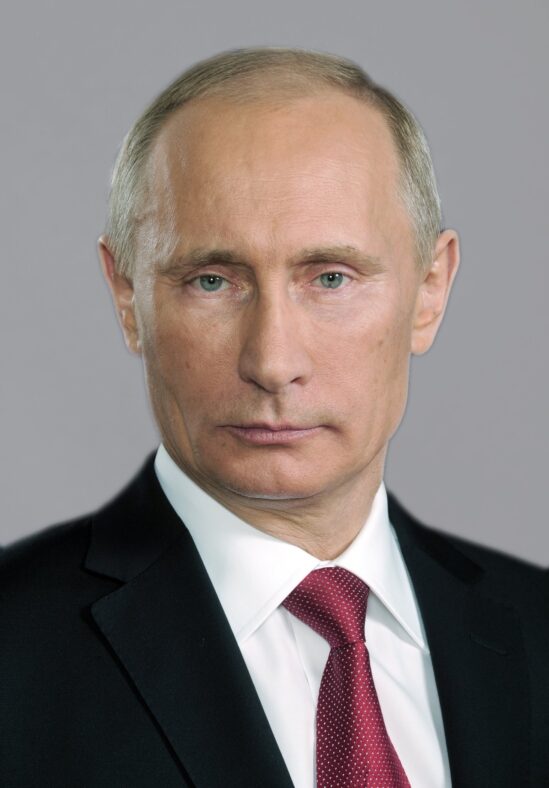
As fresh peace negotiations approach next week with U.S. mediation, Russian President Vladimir Putin is intensifying missile and drone attacks on Ukraine’s energy and economic infrastructure. This escalation comes as Russia struggles to advance on the eastern front, shifting focus to crippling Ukraine’s economy in anticipation of a harsh winter.
Russia’s Shift to Economic Warfare
Unable to make significant ground gains in Donbas, Putin has redirected efforts toward the country’s critical infrastructure. John Lough, head of international partnerships at the New Eurasian Strategies Centre, said the Russian air campaign is now “clearly aimed at destroying the Ukrainian economy.” He noted that many European allies of Kyiv may not fully grasp the severity of the situation or the financial burden Ukraine’s crisis poses to Europe.
Lough added, “Putin has concluded that he can’t win in Donbas by committing more men to battle and trying to push forward, because the Ukrainians have actually had a relatively successful summer.” He explained that Russia’s strategy is to break Ukraine through economic damage, a tactic being applied systematically.
Increasing Attacks on Civilian and Industrial Targets
Russian strikes have expanded beyond traditional military targets to include civilian infrastructure, particularly energy systems. An independent United Nations panel recently confirmed that Russia committed war crimes and crimes against humanity by intentionally attacking civilian infrastructure during the severe winter of 2025-2026.
This year, the attacks are expected to worsen. Major Ukrainian steel plants in Kryvyi Rih and Zaporizhzhia were hit by ballistic missile strikes between August and October, forcing shutdowns and threatening thousands of families with lost income. Ukrainian researcher Cristian Vlas described the situation as creating “multiple economic firestorms” across different sectors simultaneously.
Russian forces are also targeting Ukraine’s Black Sea and Danube River ports, railway infrastructure, industrial warehouses, and grain export facilities. These assaults disrupt the flow of goods and sales, further destabilizing the economy.
A particularly deadly incident occurred on November 3 when Russian forces bombed a school in Zaporizhzhia used as a shelter and aid center, killing at least 55 Ukrainians. Ukrainian authorities reported a follow-up drone attack the previous day while rescuers searched for survivors under the rubble.
Humanitarian Toll and Rising Civilian Casualties
Civilian deaths in Ukraine are at their highest levels since the early months of the war. According to ACLED data, Russian strikes have killed more than 2,700 Ukrainian civilians so far in 2026. The frequency of strikes has steadily increased, with 3,650 Russian strikes reported in January and 5,532 in October.
Ukrainian counterattacks have also intensified. In October alone, Kyiv launched 2,302 strikes inside Russia, targeting weapons production sites, military airfields, and communication facilities. This includes attacks on warehouses belonging to Russia’s largest online retailer, Wildberries.
Experts warn of a “terrible humanitarian situation” this winter, occurring much earlier than last year, as the cumulative effects of the strikes strain Ukraine’s economy and society.
Energy Infrastructure Under Siege
Strikes on energy systems have expanded to new regions, complicating the country’s already stretched air defenses. Attacks on power stations and water facilities cause widespread outages that severely disrupt businesses and daily life.
Kateryna Stepanenko, Russia Team Lead at the Institute for the Study of War, noted that Russia’s shift to daytime strikes aims to disrupt normal business hours, forcing air alerts that prevent government offices and businesses from operating legally.
Many Ukrainian power stations have been damaged beyond repair, increasing the economic strain and citizen fatigue. John Lough emphasized the dangerous moment Ukraine faces, highlighting the war’s cumulative toll on its economic fabric.
As Russia continues to target Ukraine’s economic lifelines with intensified missile and drone strikes, the country braces for a winter that experts predict will be the harshest yet. With peace talks imminent, the Kremlin’s strategy appears focused on maximizing economic pressure to force concessions, leaving Kyiv and its allies to confront both a humanitarian crisis and a mounting financial challenge.