Putin Faces Growing Domestic Impact as Ukraine War Hits Russian Heartland
Ukrainian drone attacks on Russian infrastructure bring the Ukraine war’s impact home, yet public dissent remains limited.
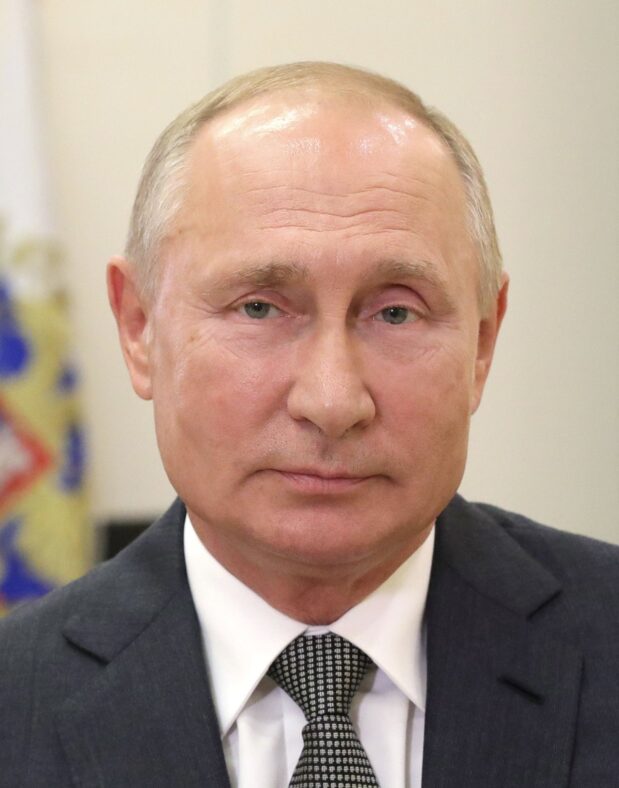
Mikhail Klimentyev / Presidential Press and Information Office / TASS/Wikimedia Commons
After more than four years of conflict, Russian citizens are increasingly feeling the direct effects of the Ukraine war as Ukrainian long-range drone strikes target industrial and energy sites near population centers within Russia. Despite fuel shortages, economic pressures, and attacks in Moscow, widespread antiwar protests have yet to emerge, highlighting the complexity of domestic responses under Kremlin control.
War Comes Home Through Drone Strikes
Ukraine’s strategic use of long-range drones has extended the battlefield into Russian territory, focusing on vital infrastructure such as oil refineries, fuel storage sites, and related industrial facilities. These attacks have inflicted damage that disrupts fuel availability and distribution, contributing to long fuel lines and increased transportation costs, as seen in areas like Sofino outside Moscow. The targeting of petroleum product facilities affects both civilian life and military logistics, signaling a shift in how the war is experienced inside Russia.
Everyday Life Disrupted but Public Response Measured
Fuel shortages and occasional strikes in Moscow have unsettled daily routines, with gasoline prices around $3.25 per gallon and diesel frequently unavailable. Yet, as reported by New York Times correspondent Valerie Hopkins on October 23, many Russians maintain a belief that “everything is fine” and claim the war “doesn’t affect my life at all.” This apparent acceptance reflects a combination of political repression, normalization of hardship, and effective state propaganda, which together suppress organized opposition and shape public perception.
Factors Behind Limited Antiwar Sentiment
Several key reasons explain why worsening conditions have not sparked widespread resistance. Russia’s strict limitations on antiwar speech, independent media, and public protests make dissent risky. Many Russians have lived through repeated political and economic instability, making gradual deterioration easier to endure. Additionally, nationalism and state-controlled media reinforce the Kremlin’s narrative, blaming Ukraine and the West for the war’s costs. Some citizens also compartmentalize, separating everyday survival from the broader conflict, while others prefer the relative stability of the current political order over the uncertainty of upheaval.
Costs and Challenges for Russia’s War Effort
The damage inflicted by Ukraine’s drone strikes imposes tangible economic and logistical burdens on Russia. Repairing critical infrastructure drains financial and industrial resources, which could otherwise support military operations. Western sanctions further complicate access to replacement technologies, slowing recovery efforts. Reduced fuel supply and increased transportation costs ripple through agriculture, industry, and exports, challenging Russia’s capacity to sustain its war effort amid ongoing military and economic demands.
Despite these hardships, economic pressure alone has not generated enough internal opposition to force a change in Kremlin policy. Authoritarian control over the political environment allows the government to suppress dissent and maintain the status quo. Consequently, Russia’s ability to continue the war hinges more on factors like workforce availability, industrial capacity, government finances, and political stability rather than popular support alone.
Ultimately, Ukraine’s campaign has brought the conflict inside Russian borders, making its consequences more immediate for ordinary citizens. Yet, as Hopkins’s reporting suggests, Russians are adapting to these wartime realities without organizing significant resistance. For now, President Putin retains the political latitude to pursue the war effort without substantial domestic constraints.