Trump Stands Firm on Russian Diesel Imports Despite Bipartisan Backlash
President Trump defends his Russian diesel import deal, facing bipartisan senators’ opposition and criticism from Ukraine’s Zelenskyy.
Daniel Torok/Wikimedia Commons
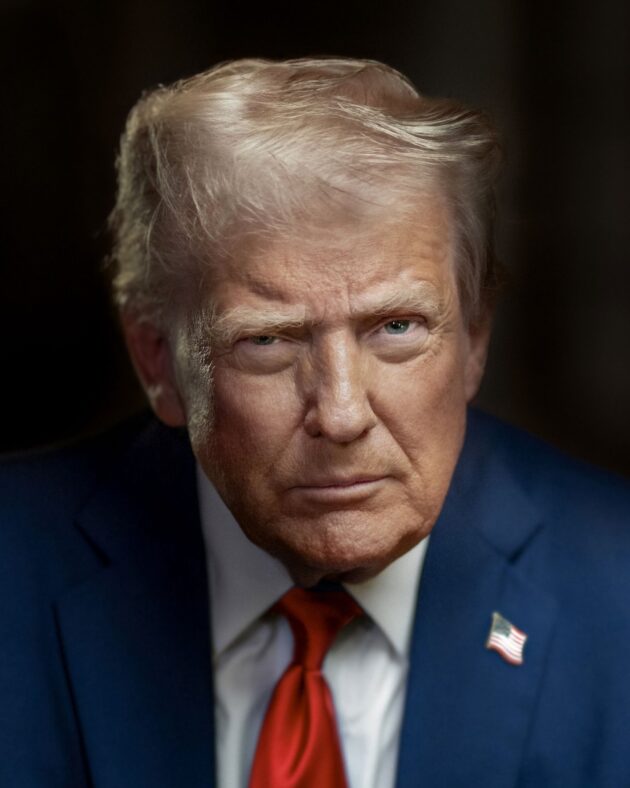
President Donald Trump reaffirmed his decision on October 12, 2026, to import Russian diesel fuel to the United States despite mounting opposition from bipartisan senators and criticism from Ukrainian President Volodymyr Zelenskyy. Trump called the move the “right choice” for the American people and cited Europe’s prior purchase of Russian energy as justification for his plan.
Trump’s Defense of the Russian Diesel Deal
In a social media post Monday morning, President Trump highlighted that the European Union paid Russia $250 billion for energy, although he did not specify the exact time period covered by this figure. Estimates from the Centre for Research on Energy and Clean Air roughly align with the $250 billion amount. Trump emphasized, “I made the right choice for the American People — ALWAYS, AMERICA FIRST!”
On October 9, Trump announced a deal with Russian President Vladimir Putin to immediately import 300,000 tons of Russian diesel fuel, with promises of millions more to come. The president framed the decision as a practical response to rising U.S. energy prices ahead of the upcoming midterm elections.
Bipartisan Senators Condemn the Decision
A group of seven bipartisan senators spoke out against the Trump administration’s plan in a statement issued on Sunday. The lawmakers warned that allowing Russian diesel imports provides financial support to Russia amid its ongoing war in Ukraine. The senators urged the administration to reverse the decision, citing the 2022 Ending Importation of Russian Oil Act, which bans Russian energy imports unless the president justifies lifting the ban to Congress—a requirement they say was not fulfilled.
The statement was signed by Republican Sens. Susan Collins, Thom Tillis, John Curtis, and Lisa Murkowski, alongside Democratic Sens. Jeanne Shaheen, Richard Blumenthal, and Ron Wyden. The senators asserted, “The United States should not provide Putin with a financial lifeline while Russia continues to kill Ukrainian civilians. The Administration must immediately reverse course.” They also criticized the lack of congressional consultation or explanation as required by law.
Ukraine’s Zelenskyy Labels Deal an “Obvious Weakness”
Ukrainian President Volodymyr Zelenskyy sharply criticized the diesel import agreement during an interview with ABC News on October 11. He described the move as an “obvious weakness” that benefits Russia by allowing it to “kill more, wage war for longer, have even less respect for America, and inflict even greater losses and damage on the world.”
Zelenskyy called for “America’s fair support for our defense of life, for our defense of people in Ukraine,” and urged the United States to engage in a “strong conversation with Russia. A strong one, not a weak one.”
Mixed Republican Responses Within Congress
Some Republicans have voiced opposition to Trump’s decision. Senator Thom Tillis, a co-signer of the bipartisan statement, rejected the import plan on NBC’s “Meet The Press” on October 11. Tillis argued the move undermines the bipartisan Lindsey O. Graham Sanctioning Russia and Iran Act, recently signed by Trump, which targets countries continuing to buy Russian oil. He stated, “If President Trump wants to end the strain of energy supplies, number one, get things right in Iran, and number two, recognize that it was Vladimir Putin, not Zelenskyy, that started this war.” Tillis said the agreement “tarnishes Lindsey Graham’s efforts to try and get those sanctions bill through.”
Conversely, House Majority Whip Tom Emmer, a Republican and pro-Ukraine advocate, defended the deal on ABC News’ “This Week” on October 11. Emmer praised Trump for “thinking out of the box” to address American concerns about high fuel prices. He stated, “He’s listening to the American people, Jon. The American people are hurting because of this world market when it comes to diesel and fuel in general.” Emmer also viewed the imports as part of Trump’s broader strategy to broker peace between Russia and Ukraine, calling it “just another step of trying to get that resolved.”
President Trump’s Russian diesel import plan remains a focal point of political debate, balancing economic concerns with the ongoing conflict in Ukraine and legislative constraints.