North Carolina Senate Advances Constitutional Amendment to Cap Individual Income Tax Rate
NC Senate approves constitutional amendment to cap individual income tax at 3.5%, sending it to the House for a vote.
Associated Press
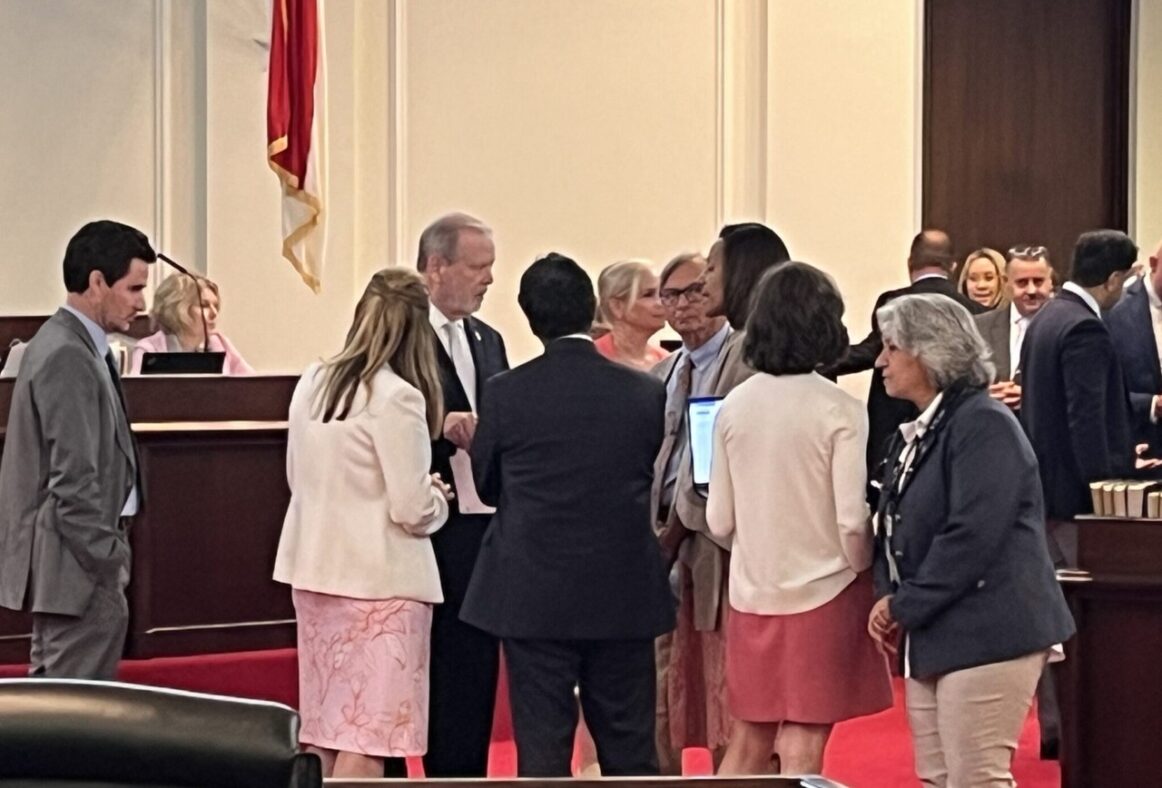
RALEIGH, NC – The North Carolina Senate has cleared a significant hurdle, approving a proposed constitutional amendment that would establish a 3.5% cap on the state’s individual income tax rate. The measure, a key component of the Republican-led budget negotiations, now heads to the House of Representatives for a vote scheduled for Wednesday.
The Senate’s 30-18 vote fell along party lines, with Republicans championing the amendment as a means to reduce the tax burden on citizens and give voters the ultimate say on tax policy. Democrats, however, voiced strong opposition, arguing the amendment is fiscally irresponsible and could hamstring the state’s ability to respond to emergencies.
Debate Over Tax Relief and Fiscal Responsibility
Senator Mike Lee (R-New Hanover) underscored the financial pressures facing North Carolinians, citing rising costs for essential goods. “We’ve made a commitment to the voters, to the citizens of North Carolina, to reduce the tax burden on them,” Lee stated. “It’s just one way we can do it — is to put it to them. It’s not us making the decision.” This sentiment reflects a broader Republican platform focused on tax reduction and fiscal conservatism.
It is important to note that this amendment would not immediately alter the current tax rate. Instead, it is part of a broader Republican budget agreement that outlines a phased reduction in the individual income tax rate. The rate is slated to decrease from 3.99% this year to 3.49% for tax years 2027-2029, further dropping to 3.14% for 2030-2032, and then to 2.99% for 2033-2034. Additional rate reductions beyond 2034 are contingent on meeting specific new revenue triggers.
The proposed constitutional amendment is not the only fiscal measure advanced as part of the budget deal. Republican leaders in both chambers have also agreed to include a separate amendment concerning the General Assembly’s authority to limit local property tax increases.
Political Strategy and Voter Engagement
The timing of these proposed constitutional amendments has drawn criticism from Democrats, who suggest they are being used as “get-out-the-vote” tools for the upcoming November elections. Senate Democratic leader Sydney Batch (D-Wake County) expressed her belief that Republicans are leveraging these popular issues to energize their base, particularly in light of historical midterm election trends where the president’s party often loses seats.
“They are terrified about the electorate in November because polling shows that they have a depressed voter turnout in regards to their own base,” Batch commented. She anticipates that the tax-related amendments, however, could also galvanize Democratic and unaffiliated voters. “Every single person who pays taxes doesn’t want to pay as much taxes as they’re paying, for the most part,” she added. “Your base will come out, but so will ours.”
Senate leader Phil Berger (R-Rockingham) acknowledged the potential for these amendments to increase voter turnout but denied a direct link to a specific get-out-the-vote strategy. “I don’t know if it is, but obviously, if it’s something that’s popular with the people and it brings more people out to vote, I think everybody ought to be in favor of it,” Berger remarked.
Opposition and Concerns
During the Senate debate, Democratic proposals aimed at exempting low-income earners from income taxes and excluding the top 1% of earners from the 3.5% cap were voted down. Senator Lisa Grafstein (D-Wake) voiced concerns about the state’s current financial standing, stating, “The fact is, we’re not paying our bills today. We don’t have a budget surplus. We only have unpaid bills.” She highlighted issues such as delays in payments to teachers and state employees, and broken promises to retirees, suggesting the state is relying on local governments to cover its financial obligations.
Further reservations about the 3.5% cap were articulated by former state Representative Paul “Skip” Stam (R-Wake County). In an opinion piece, Stam argued that such a low cap could necessitate increases in other taxes, encourage greater state borrowing, and potentially jeopardize North Carolina’s AAA bond rating.
The House is expected to deliberate on the amendment on Wednesday. In addition to tax-related amendments, Republican leaders have also proposed constitutional changes concerning farming, labor unions, the election of the State Board of Education, and the replacement of Council of State members. Voters are also slated to consider a separate proposed amendment to modify the existing voter ID constitutional amendment, which was approved by the legislature in 2024.