WakeMed Defends Atrium Alliance Amidst Public Scrutiny
WakeMed leaders are actively promoting their proposed alliance with Atrium Health, addressing concerns about cost, transparency, and speed following public backlash.
Associated Press
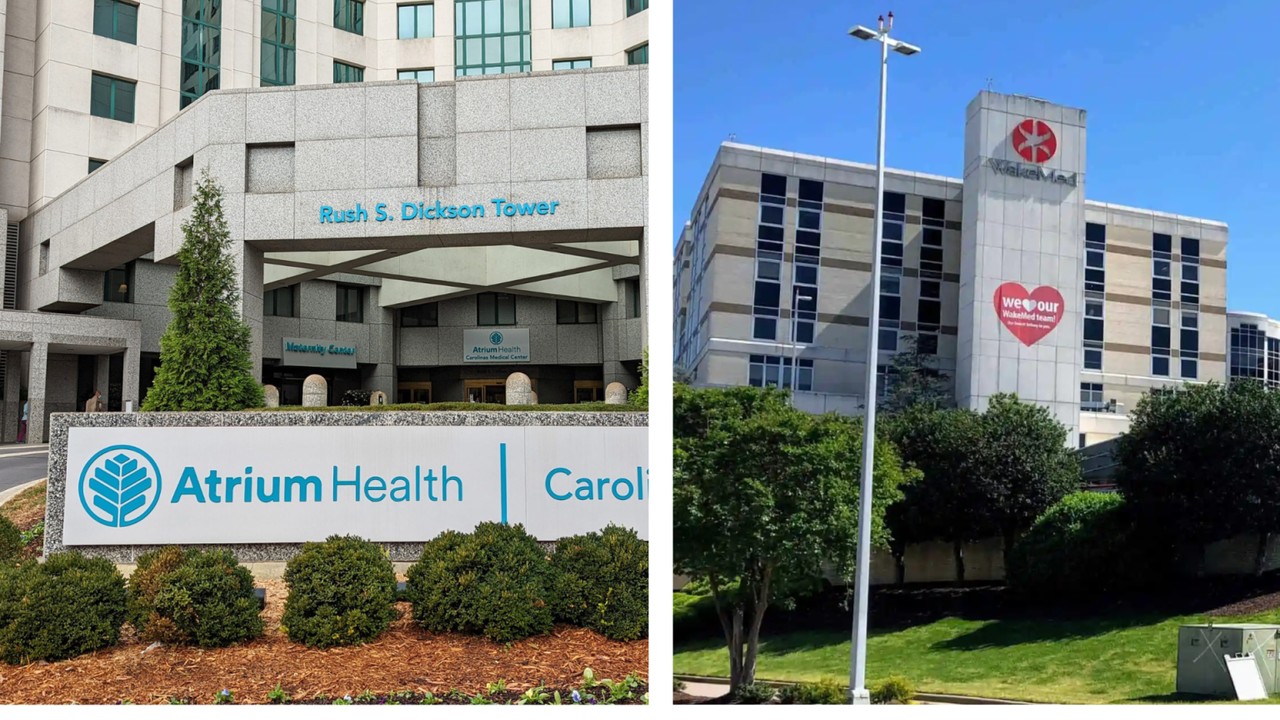
WakeMed Health & Hospitals is making a strong case for its proposed combination with Atrium Health, a move that promises to significantly reshape the healthcare landscape in the Triangle region. Following a wave of public apprehension and criticism that emerged shortly after the announcement, WakeMed leaders have stepped forward to articulate the strategic advantages and long-term vision behind the alliance.
A Shift in Perspective
WakeMed Board Chair Thad McDonald acknowledged the initial surprise and concern that greeted the news. “I am acutely aware of the angst this announcement has caused with staff, with community leaders and patients,” McDonald stated during a recent Wake County Commissioners meeting. He revealed that the WakeMed board, initially hesitant when first approached by Atrium Health two years ago, underwent an extensive review process, including an independent consultant’s evaluation, before embracing the proposal. “After two years of due diligence, we came to see the pure beauty of it,” he added.
Addressing Community Needs and Future Growth
The proposed combination, which has been met with concerns regarding potential cost increases, transparency, and the rapidity of the decision-making process, prompted the Wake County Board of Commissioners to postpone a vote on the matter for 90 days. This pause is intended to allow WakeMed more time to disseminate details and foster community engagement. In response, WakeMed organized a press conference to clarify its position and the anticipated benefits of the alliance.
WakeMed CEO Donald Gintzig emphasized that while the hospital system possesses adequate capital for current operations, additional resources are essential to meet the demands of Wake County’s rapidly expanding population and to remain competitive against neighboring health giants like UNC Health and Duke Health. Atrium Health has committed to investing $2 billion in Wake County as part of the agreement. Gintzig highlighted the critical need for these funds to modernize WakeMed’s aging flagship campus on New Bern Avenue and to establish a much-needed mental health hospital in Garner.
“There are people that are making comments without knowing all the facts,” Gintzig remarked to reporters. “I hope to clarify that for you all, because at the end of the day, when we tell our story, I hope and pray that you will see the wisdom of what we’re trying to do, not for today, but for five, 10 and 15 years.”
A Collaborative Partnership, Not a Takeover
Gintzig was resolute in defining the nature of the deal, stating that Atrium is not acquiring WakeMed, and no funds are changing hands. He also clarified that it is not a merger in the traditional sense, nor is it a takeover. He likened the arrangement to a marriage, emphasizing a commitment to shared investment and community support. “We are willfully under our choice going into this,” he explained, underscoring that WakeMed is actively choosing to join this health network.
Due to state regulations, Atrium, as a county-chartered hospital authority, can only expand within a 10-mile radius of Mecklenburg County by partnering with existing local hospitals. This strategic approach has led to previous collaborations, such as the one with Wake Forest Baptist in Winston-Salem. Atrium’s national expansion includes acquisitions like Navicent Health in Georgia and a combination with Advocate Aurora Health in the Midwest, making it a significant entity within the Advocate Health network, the third-largest nonprofit hospital chain in the U.S.
Enhanced Services and Financial Support
Gintzig outlined several key benefits of the proposed alliance, including enhanced purchasing power for supplies, expanded access to advanced specialty and mental health services, the potential creation of up to 3,300 new healthcare jobs, and crucial financial backing for facility upgrades and new construction. He expressed that while WakeMed is not facing imminent closure, the lack of investment in technology, facilities, and staffing, particularly at the Raleigh campus, could lead to a decline.
Both hospital systems highlighted shared values, particularly a commitment to addressing healthcare equity. Following the combination, WakeMed plans to offer financial assistance to families earning up to 400% of the federal poverty level, a more generous policy than its current one. Steve Smoot, Advocate’s division president for North Carolina and Georgia, stated, “Anyone below 300 percent of the poverty level won’t even get a bill,” a policy that could benefit a family of three earning up to $81,960 annually.
Oversight and Future Scrutiny
The proposed structure designates Atrium as WakeMed’s “sole member,” granting it primary decision-making authority over day-to-day operations. A joint board will be established, with eight members appointed by Wake County Commissioners and six by Atrium. Concerns have been raised about Atrium’s power to remove board members under broad conditions, as detailed in the proposed articles of incorporation.
The alliance has drawn criticism from various officials. Raleigh Mayor Janet Cowell described it as “a raw deal,” while State Auditor Dave Boelick called for “greater scrutiny.” State Treasurer Brad Briner voiced concerns about the potential for increased healthcare costs for state employees due to the combined market power of WakeMed and Atrium.
Physician Josh Ward, speaking at the commissioners’ meeting, cited research suggesting that hospital consolidation often leads to higher prices without guaranteed improvements in care. Michael Rudd, a WakeMed patient, expressed a desire for accountability and suggested incorporating mechanisms like an “off-ramp” or a “lookback period” to measure the success of the partnership.
Should the Wake County Commissioners approve the deal, it will still face review by the state Attorney General and the Federal Trade Commission. Attorney General Jeff Jackson’s office has stated it will conduct a thorough review, focusing on ensuring access to affordable, high-quality healthcare. Meanwhile, several bills have been introduced in the General Assembly that could increase legislative oversight of major hospital transactions.
Wake County Commissioners’ Chair Don Mial emphasized that the 90-day pause is WakeMed’s opportunity to build public trust. “They must lead the charge on this, from the standpoint of making sure they are letting the people of Wake County know what this is about,” Mial stated. “Because in order for them to move forward, if we don’t have the public support of this, it’s going to be a difficult task.”