Sen. John Kennedy Rebuked After Insulting Jack Smith at Senate Hearing
Sen. John Kennedy faces scolding after telling former special counsel Jack Smith, “you make me want to throw up in my mouth” during Judiciary hearing.
Phil Mistry / PHIL FOTO/Flickr
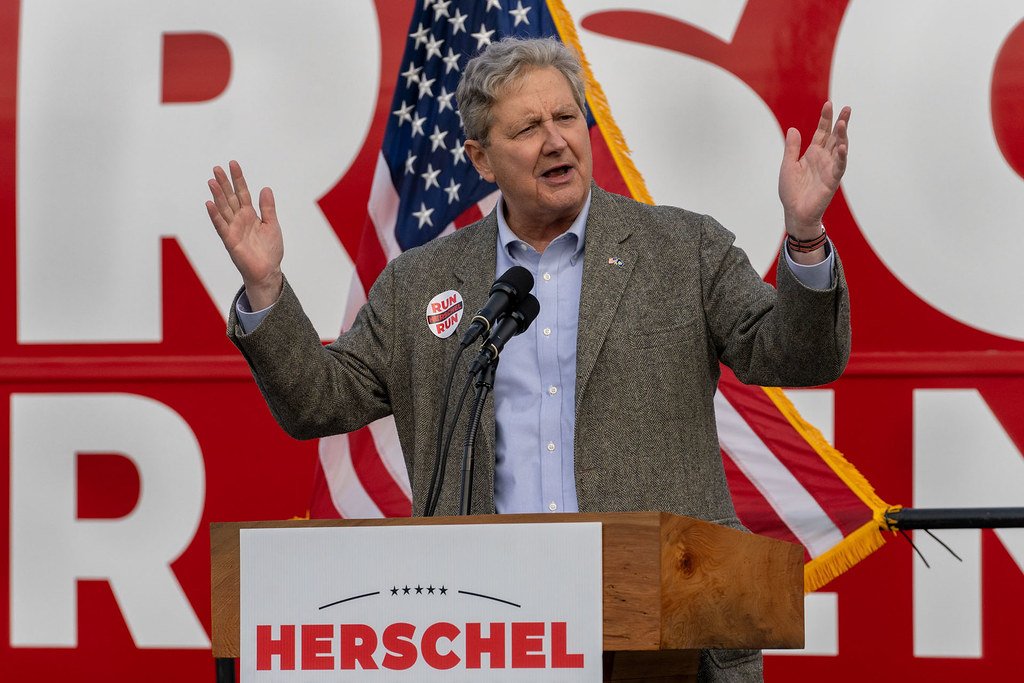
Senator John Kennedy (R-La.) was sharply rebuked during a tense Senate Judiciary Committee hearing on September 29, 2026, after directing a harsh insult at former special counsel Jack Smith. The hearing, which focused on Smith’s investigations into President Donald Trump, quickly turned personal as Republicans challenged Smith’s conduct and motives in pursuing criminal cases against the president.
Kennedy’s Insult Sparks Immediate Reprimand
During the hearing, Sen. Kennedy told Jack Smith, “you make me want to throw up in my mouth,” a comment that broke the usual decorum expected in Senate proceedings. The remark triggered a swift rebuke from members of the committee, underscoring the charged atmosphere surrounding Smith’s testimony. While the full transcript of the exchange has not been publicly released, reports confirm the severity of the reprimand aimed at Kennedy for the personal attack.
The insult set a combative tone for the session, which saw multiple sharp exchanges between Republicans and Smith. The former special counsel, who led federal investigations resulting in two criminal cases against President Trump, faced accusations from Republican senators alleging political bias and misconduct in his prosecutorial decisions.
Republicans Question Smith’s Investigations and Motives
Smith’s appearance before the Senate Judiciary Committee came amid ongoing Republican criticism of his role in the Trump investigations. GOP senators accused Smith of improperly targeting President Trump and Republican lawmakers, framing the prosecutions as politically motivated. These claims reflect broader GOP concerns about the Justice Department’s independence and congressional oversight limits under the Trump administration.
Smith and his supporters countered by emphasizing adherence to evidence and the rule of law throughout the investigations. Despite the heated exchanges, the hearing did not resolve the fundamental dispute over Smith’s conduct or the legitimacy of the criminal cases against President Trump. Instead, it highlighted how political and personal conflicts can overshadow legal scrutiny in high-profile oversight hearings.
Schmitt’s Failed Perjury Accusation and Klobuchar’s Rebuttal
Another notable confrontation involved Sen. Eric Schmitt (R-Mo.), who accused Smith of perjury and alleged coordination with Fani Willis, the former Fulton County district attorney responsible for Georgia state charges against Trump. Schmitt’s claim partly hinged on Smith allegedly attending an Atlanta Hawks basketball game on February 3, 2026.
Smith refuted the claim, stating he was actually at a University of Iowa Hawkeyes game in Maryland to watch Caitlin Clark play, not in Atlanta. This factual correction undermined Schmitt’s allegation and led to a rebuke from Sen. Amy Klobuchar (D-Minn.). Klobuchar criticized Schmitt for making serious accusations based on incorrect information, calling for an apology for the misleading claim.
“For a U.S. senator to have false information and imply misconduct based on confusion about the name of a team is something that deserves an apology,” Klobuchar said, emphasizing the need for evidence-backed claims in such high-stakes oversight hearings.
Senate Hearings as a Clash of Oversight and Political Theater
The September 29 hearing underscored the dual nature of Senate oversight: a forum for questioning officials and establishing a public record, but also a stage for political confrontation. Republicans’ sharp questioning of Smith reflected broader partisan battles over the Justice Department’s role and prosecutorial independence under President Trump’s administration.
At moments, legal arguments gave way to personal attacks, illustrating how politically charged these proceedings have become. The hearing served as a reminder of the challenges Congress faces in conducting oversight that is both rigorous and respectful, especially when investigating figures involved in the nation’s most divisive criminal cases.
As the Senate Judiciary Committee continues to examine the Justice Department’s actions, the tension between political agendas and legal processes remains a defining feature of the debate surrounding President Donald Trump’s investigations.